RacesReviewed / Stories
Boston at 52: Amy Johnson's Long Road to Hopkinton
A personal story about earning a Boston qualifier at 52, getting to Hopkinton, and discovering that race weekend can feel both bigger and more intimate than you expect.
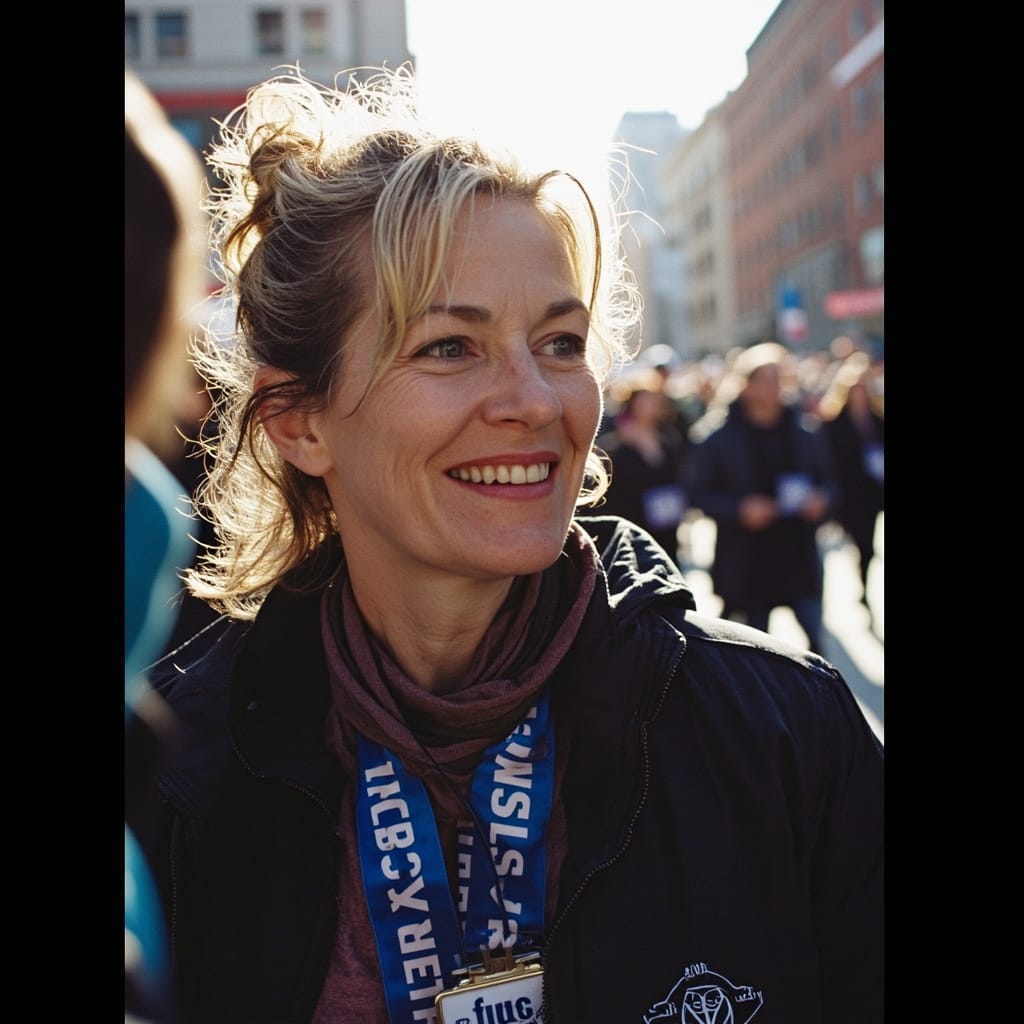
Amy Johnson from Worcester, MA qualified for Boston at 52. Her finish time of 4:15:00 was just the beginning of what turned out to be a much bigger weekend.
Eleven years of almost
Amy Johnson had been chasing Boston for eleven years when she finally crossed the line in Hartford. Not with a scream, not with tears. Mostly just relief. A 3:38:42 at the Eversource Hartford Marathon, four minutes under the standard. She was 52, from Worcester, Massachusetts, and she had done it.
'I kept thinking it would feel different,' she told me. 'Like the finish line would be this big emotional moment. Instead it was just... done. And then I had to figure out what came next.'
What came next was the hardest part: actually going.
The drive up
For years, Boston had lived in Amy's head as a concept. A standard. A benchmark. A thing that serious runners did. She had friends who had tried and missed. She had watched the coverage from her living room more times than she could count. The qualifier felt imaginary right up until the moment she registered, and then it became terrifyingly real.
'Once I was in, everything got very practical,' Amy said. 'Hotel points, shuttle buses, what to pack, weather apps I had never opened before. Boston stopped being a dream and started being a logistics problem.'
She drove up the day before with her husband, Mike. They hit traffic outside Framingham and got to the hotel around seven at night. Amy did not sleep well. She never does before a race. But instead of panicking, she just lay there thinking about the years behind her. All the early mornings. The miles in the dark. The races where she got close but not quite. The winter she injured her calf and had to rebuild from nothing.
'I realized I had been working toward this for over a decade,' she said. 'And for what? To stand on a start line in Hopkinton and see what happens.'
Race morning starts before race morning
The buses leave early. That is the part nobody talks about enough.
Amy was on the 5:45 from Boston Common, packed in with a few thousand other runners in the dark. Nobody was talking much. She watched the city disappear out the window and felt the bus turn onto the Mass Pike heading west. The athlete village in Hopkinton was cold. Colder than she had dressed for. She spent the first hour walking in circles just to stay warm.
She noticed things she had not expected. A woman next to her was praying quietly. A guy in a Hawaiian shirt was stretching against a barrier, clearly doing his best to look calm. A volunteer handed Amy a cup of water and said, 'You have got this,' in a voice that sounded like she had been waiting all year to say it.
'There is something disarming about being in a field with people who all worked for the same start line,' Amy said. 'Nobody is performing. We are all just trying not to mess up the one day we have.'
She was less nervous than she thought she would be. At 52, she had earned a little perspective. She was not trying to prove anything to anyone. She just wanted to have a good day.
The course is not what you think
Boston is famous. Everyone knows the course. Wellesley Scream Tunnel. Heartbreak Hill at Newton. The right onto Hereford, the left onto Boylston.
But knowing a course and feeling it are different things.
Amy went out conservative, exactly as planned. She knew the first few miles in Hopkinton were net downhill and that runners her age had learned the hard way not to bank time on a downhill start. She held back, let faster people blow past her, and tried to focus on her own race.
The hills started around mile 16, and that is when the day got real. Heartbreak Hill is not steep. It is long. It is the part of the Newton hills where your legs start asking questions your training has not prepared answers for. Amy's answer was simple: keep moving. Walk the aid stations if she had to. Do not stop.
She walked a few steps at mile 20, just long enough to get water down. A spectator yelled her name. Not because he knew her, but because her bib said AMY and it was the kind of day where strangers shouted whatever came to mind.
'That was the moment it hit me,' she said. 'Not the finish line. The running itself. I was actually out there, on the course, in the middle of it.'
What masters running teaches you
Amy crossed Boylston in 4:15:00. Four minutes slower than her qualifier. Completely normal for Boston and the nerves that come with it. She did not collapse, did not call her mother from the chute. She got her medal, got her photo taken with the finish line behind her, and started the long walk back to find Mike.
'Masters runners get slower in general,' she said. 'But we also get smarter. I know my body now in a way I did not at 40. I know when to push and when to protect the day. I know that a four-minute slowdown from a qualifier to Boston is just the tax for being there.'
She is not wrong. The conversation about aging and running often focuses on decline, but Amy experienced something more nuanced. Her times had dropped from what she ran in her late 40s, but her relationship to the sport had deepened. She cared more about the overall experience and less about the splits. That made her a better race-day runner, not a worse one.
'Young me would have died on Heartbreak Hill trying to hold pace,' Amy said. 'Fifty-two me walked the water stations and felt zero shame about it. And I finished feeling okay.'
The standard got me to Boston. The weekend reminded me why I still love marathoning.
Amy Johnson
The finish line is not the ending
The thing Amy remembers most, weeks later, is not the finish. It is standing in the athlete village afterward, still in her race bib, watching other finishers come through. A woman in her 60s crossed the line with her hands raised and sat down right on the grass, just sitting there, grinning. A guy was calling his daughter on his phone, saying, 'I did it, bug. I actually did it.'
'Boston is big,' Amy said. 'But it felt more intimate than I expected. Everyone had their own reason for being there. Nobody was asking if your time was fast enough.'
She already knows she will be back. Not to qualify. She is done with the chase. Just to run it again, to be part of the weekend, to feel the energy of a city that turns the whole week into a celebration of ordinary people who worked for something and got it.
'The standard got me there,' Amy said. 'But the weekend taught me why people come back year after year. It is not the race. It is the recognition. Everyone in that field knows what it cost to get there. You do not have to explain anything.'
She is back in Worcester now. Back to her regular routes, her early mornings, her easy Saturday miles with the group. But she keeps her bib in a drawer next to her dresser, folded up, a little wrinkled from the weather and the sweat and the bus ride in the dark.
She does not need to look at it. But she likes knowing it is there.
What stayed with Amy
- Qualifying at 52 felt like proof that years in the sport still matter. Patience, rest days, and steady seasons all counted.
- Boston weekend was bigger and more intimate at the same time. The scale surprised her. The humanity surprised her more.
- She walked the water stations without shame and finished feeling okay. That felt like its own kind of progress.
Three race pages a Boston-minded runner may open next
Race page
Boston MarathonStart with the course, weather, and logistics if you are still dreaming about running it.
Open race researchRace page
Eugene MarathonA strong option for runners searching for another fast, meaningful spring marathon.
Open race researchRace page
Rocket City MarathonWorth opening if your next goal is a practical, lower-chaos BQ attempt.
Open race researchKeep reading
More coverage
Keep reading
Editorial
2026 Boston Weekend Preview: Stars, Storylines, and What Runners Should WatchThe pro fields matter, but so do the rhythms of Boston weekend: the 5K, the invitational mile, and the feeling that the whole city is warming up for Monday.
Open articleEditorial
Athens 2030 Will Host the World Marathon Championships, and That Feels RightSome championship announcements are administrative. This one lands differently because the city itself carries so much marathon symbolism.
Open articleEditorial
The New Five-Years, One-Transfer Order Could Reshape College Running TooCollege-running storylines often arrive through bigger NCAA news, but eligibility changes can alter roster continuity, development arcs, and coaching strategy fast.
Open article