RacesReviewed / Stories
Running Around Washington, DC With Three Boys in Tow
A 44-year-old mom of three turns a family vacation into a handful of memorable runs and discovers that travel running is often about sneaking joy into tight windows.
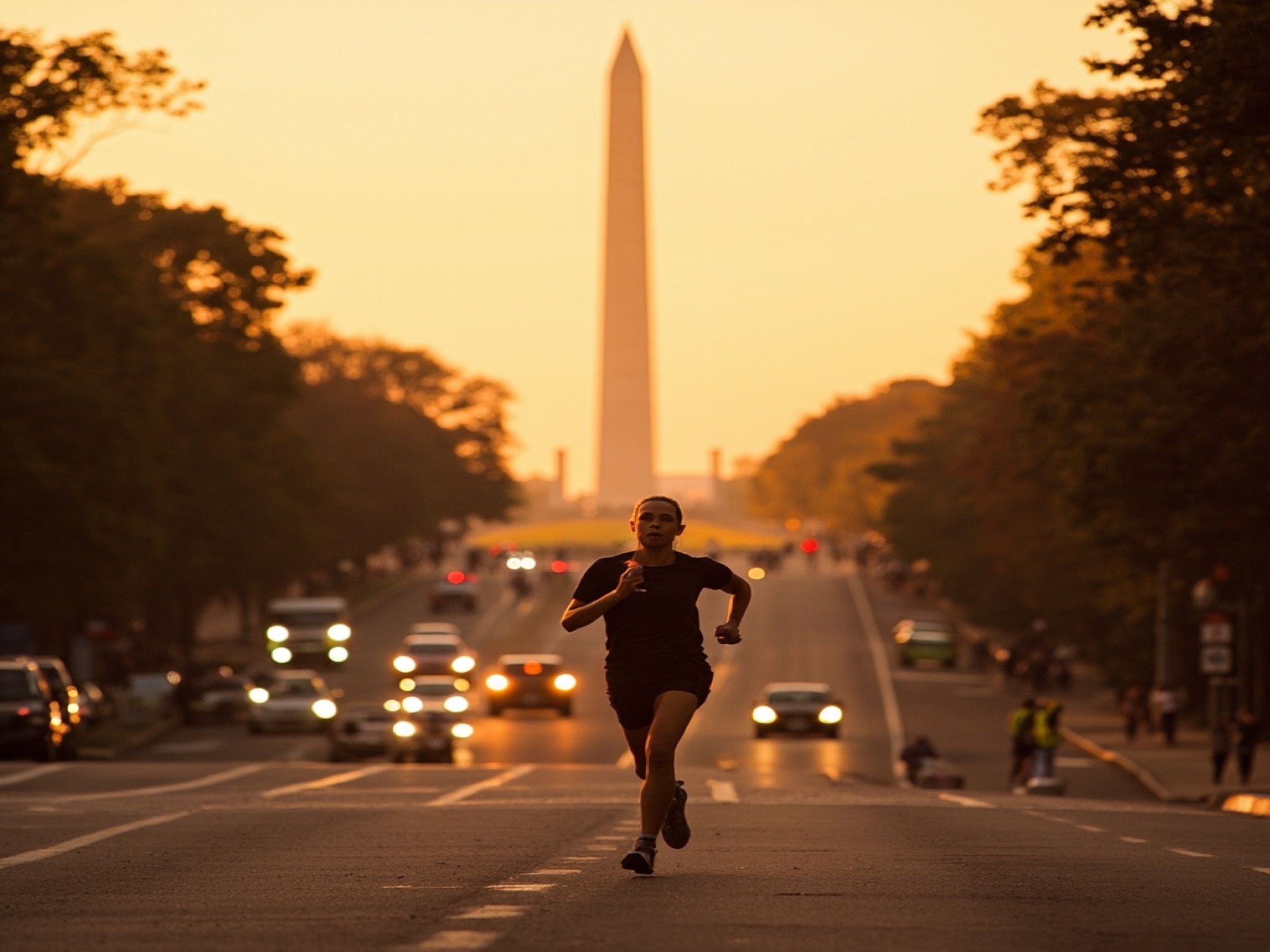
Vacation runs are rarely perfect, but the ones around the Mall, Georgetown, and Rock Creek Park ended up becoming the part of the trip she remembers best.
Vacation running starts with lower expectations
She is 44, traveling with a spouse and three boys, and knows enough not to build a fantasy training block into a family vacation. Travel running sounds glamorous when people post sunrise photos and route maps, but the reality for parents is much messier. You are borrowing time from sleep. You are negotiating around breakfast, moods, tickets, weather, and the general unpredictability of moving a family through a city. The real win is usually not fitness. It is finding little pockets of autonomy inside a trip that belongs to everyone.
Washington, DC happened to offer those pockets surprisingly well. One short sunrise jog around the Mall became another along the Georgetown waterfront, and then another through Rock Creek Park while the rest of the family slept in. None of the runs were especially fast. None of them needed to be. They functioned more like orientation, therapy, and private sightseeing than formal training. In a busy family week, that was enough to make them memorable.
That is one of the best things about running on trips: it gives you a city before the day officially starts. Streets are quieter. monuments feel larger. hotel neighborhoods make sense in a different way. A route can reveal where the river bends, where the tourists will crowd later, where the city softens into trees. When you are traveling with children, those early miles can feel like the only part of the day that belongs just to you.
The runs were small, but the payoff was not
It would be easy to dismiss these as tiny maintenance jogs, the sort of thing serious runners apologize for. That misses the point. A thirty-five-minute run on vacation can change the emotional weather of the whole day. It can take the edge off irritability. It can turn a crowded itinerary into something manageable. It can give a parent a private reset before spending hours in lines, museums, cafés, or transit.
She noticed that each run gave her a different version of the city. The Mall felt ceremonial at sunrise, almost theatrical in its emptiness before the buses came. Georgetown felt more local and lived-in, the kind of place where a run helps you imagine what ordinary life might feel like there. Rock Creek Park felt like an escape hatch, proof that a city trip could still include trees, dirt, and a little space to breathe. Together they made the trip feel textured in a way that sightseeing alone rarely does.
There is also a subtle confidence boost in finding your feet in a new place. Travel can make even competent adults feel disoriented. You are always reading signs, scanning maps, managing time, and trying not to forget something obvious. A run cuts through that. You navigate by feel for a while. You stitch together landmarks with your body instead of with an itinerary. By the time breakfast starts, the city already feels a little less foreign.
What travel running gives parents that workouts do not
Parents who run on trips are not usually chasing training perfection. They are trying to protect a small version of themselves that can disappear inside logistics. That does not make the running selfish. In many cases it makes the rest of the day better for everyone. A calmer parent is easier company than a resentful one. A parent who got outside for forty minutes may be more patient in the Smithsonian cafeteria than one who has been on kid duty since dawn.
That is why convenience and safety matter so much more than ideal workouts. On a family trip, the best route is the route you can actually start without drama and finish without creating more work for anyone else. Well-lit paths, obvious landmarks, and quick hotel exits matter. So do mental expectations. If you insist that every vacation run has to count as capital-T Training, you will almost certainly come home annoyed. If you treat the runs as part movement, part travel ritual, they become much easier to love.
Destination races hold some of their appeal for exactly this reason. Runners already know that movement can be one of the most intimate ways to meet a place. You notice neighborhoods differently on foot. You understand scale differently. You attach memory to effort. The family vacation version is less dramatic, but the emotional logic is the same. Running lets a city sink in.
Travel-running truths
- A 35-minute run can be enough to make a vacation feel more grounded.
- Parents who run on trips need convenience and safety more than perfect workouts.
- Destination races appeal partly because runners already love discovering places this way.
She came home remembering the runs most clearly
When she thinks back on the trip now, the boys still dominate the big family memories: a museum they loved, a joke that kept resurfacing, a long day that somehow held together. But beneath those shared memories are the runs, still glowing quietly. Not because they were epic, but because they were hers. They turned the city from backdrop into experience. They gave shape to the mornings. They reminded her that even when life is loud and full and wonderfully crowded, there is still value in finding a little motion and silence for yourself.
That is the gentle promise of travel running. It rarely looks impressive from the outside. It may not make the training log look heroic. But it can make a trip feel inhabited instead of merely consumed. It can turn a visit into a relationship. And for busy adults, especially parents, that can be one of the most realistic forms of joy the sport has to offer.
The routes became part of the family story too
What surprised her later was how often the running bled back into the shared vacation itself. She had little details to offer over breakfast: which monuments were already glowing in the sun, which path looked better than expected, which bridge the boys might like later in the day. The private runs gave her extra ways to participate in the trip once everyone was awake. She was not splitting herself off from the family so much as gathering more texture to bring back to it.
That may be one reason travel running feels so durable as a habit for busy adults. It gives you solitude without fully removing you from the larger experience. The city starts to feel more knowable. Your own mood gets steadier. And the family day that follows can feel less like a schedule to survive and more like something you are ready to enjoy. That is not a side benefit. For many parents, it is the whole point.
Running will never make family travel easy. But it can make it feel more lived in. That is a quieter gift than perfect training, and usually a more lasting one.
More coverage
Keep reading
Editorial
2026 Boston Weekend Preview: Stars, Storylines, and What Runners Should WatchThe pro fields matter, but so do the rhythms of Boston weekend: the 5K, the invitational mile, and the feeling that the whole city is warming up for Monday.
Open articleEditorial
Boston at 52: Amy Johnson's Long Road to HopkintonAmy Johnson from Worcester, MA qualified for Boston at 52. Her finish time of 4:15:00 was just the beginning of what turned out to be a much bigger weekend.
Open articleEditorial
Athens 2030 Will Host the World Marathon Championships, and That Feels RightSome championship announcements are administrative. This one lands differently because the city itself carries so much marathon symbolism.
Open article