RacesReviewed / Stories
The Collegiate Runner Who Fell in Love with Trails
After years of splits, workouts, and lap-counting, one former college runner found joy again when racing stopped being about precision and started feeling like adventure.
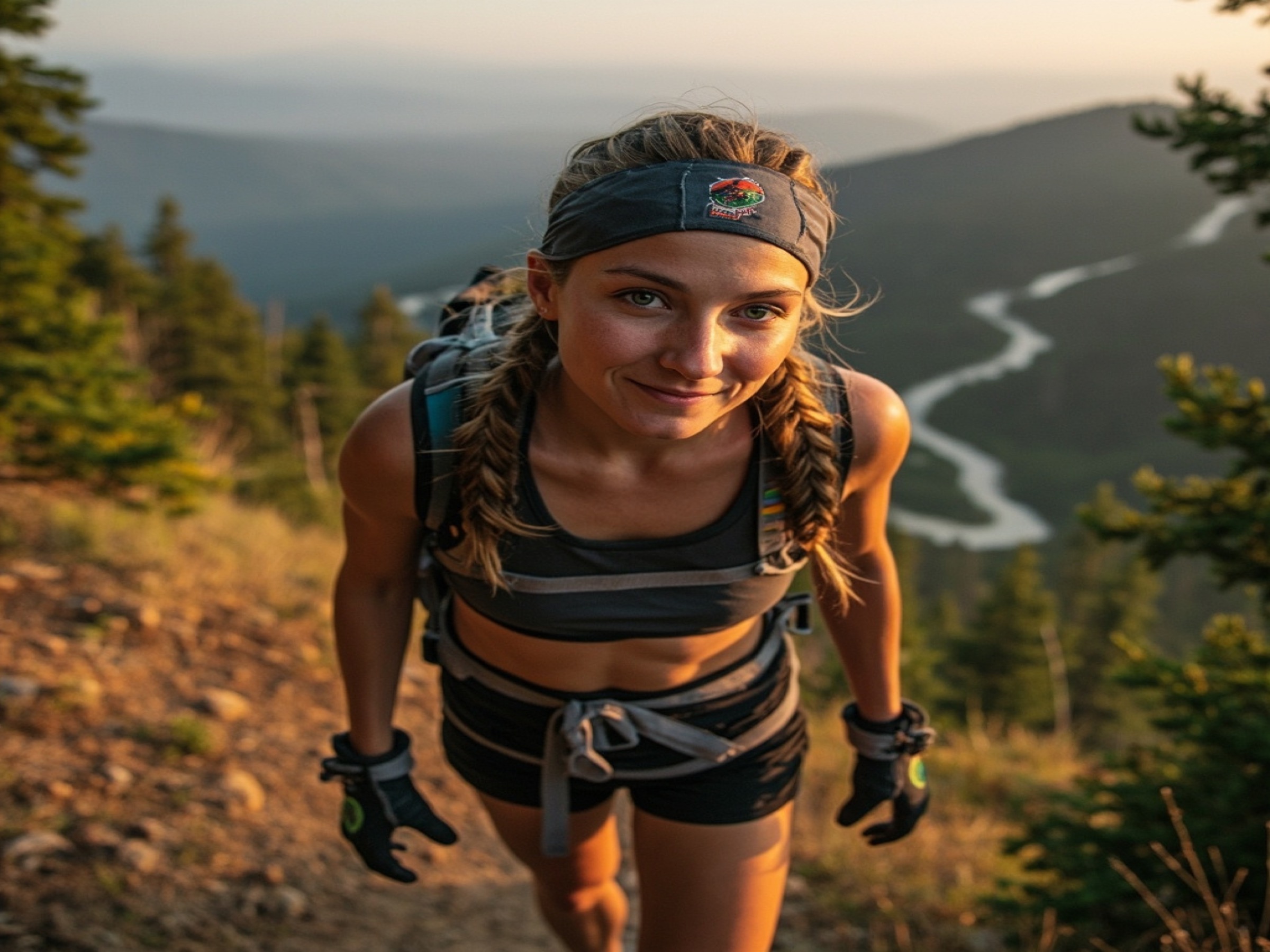
She left college burned out on track and road expectations, then stumbled into trail running and found a version of the sport that felt generous again.
She thought she was done with the whole thing
She thought she was done with racing by the end of college, and maybe even done with running as an identity. The sport had once given her structure, confidence, and a clean way to understand herself. By senior year it mostly gave her anxiety. Everything felt measured. Every run carried the ghost of what it was supposed to be. Easy days felt too slow. Workouts felt like judgment. Meets felt less like opportunities and more like exams she had already taken too many times.
Graduation did not make that feeling disappear. It followed her into the first months of ordinary adulthood. She ran because stopping completely felt too dramatic, but the joy was gone. Every familiar route still came with the same internal accounting: what pace, what split, what does this say about me now? She had escaped the team environment without escaping the mindset.
Then a friend nudged her into a local trail race. She said yes mostly because it did not feel serious enough to activate the old pressure. She did not know the scene, did not have the right vocabulary, and did not arrive with any special expectations. That turned out to be the opening. When a runner has spent years over-identifying with precision, sometimes the first relief comes from entering a place where precision is not the only currency.
What changed was not the difficulty but the feeling
The revelation was not that trail running is easier. It is not. Trails can be harsher, more technical, more physically demanding, and more mentally chaotic than road racing. What surprised her was that the difficulty felt different. On trails she was still working hard, but the work no longer felt like an argument with who she had been in college. The terrain kept interrupting comparison. You had to pay attention to footing, descents, turns, weather, and terrain. That left less room for the old obsessive self-evaluation.
The racing atmosphere mattered too. People chatted before the start. The clothing was mismatched and practical. Nobody seemed interested in projecting certainty. When things got hard, the difficulty felt shared rather than graded. She could be competitive without feeling trapped inside a ranking system. She could climb badly, recover, laugh, and keep moving. The sport did not suddenly stop being serious. It simply stopped feeling punitive.
That distinction is important for former collegiate runners. Burnout is often described as fatigue, but it is also a narrowing of self. You start to feel as if the only valuable version of you is the version that performs cleanly. Trail running widened her again. It let her be strong, awkward, curious, underprepared, joyful, and ambitious all at once. That kind of permission is more restorative than any training break.
Adventure gave her a way back to effort
One of the quiet gifts of trails is that they bring uncertainty back into the sport in a good way. College running had made uncertainty feel like failure. If a race went strangely, something was wrong. If a split drifted, someone had misjudged. On trails, unpredictability is part of the point. The course may ask different questions than you expected. Conditions may shift. The effort may be honest even if the pace is meaningless. That does not remove competitiveness; it reframes it.
She started to love the way trail running dissolved tidy narratives about who belonged where. Road and track culture can become very legible very quickly. You know the signals. You know what counts. Trail culture has its own hierarchies, but to her it felt roomier. A former collegiate runner, a longtime hiker, a parent returning to fitness, and a stubborn local specialist could all line up together and each have a valid reason to be there.
Most of all, she discovered that adventure and discipline do not cancel each other out. She still likes training. She still likes getting stronger. She still likes the focused satisfaction of preparing for something hard. The difference is that the preparation now leads toward curiosity instead of judgment. She can toe the line wondering what the day will ask of her, rather than obsessing over whether she will confirm an old identity.
Races a road runner might open when trail curiosity starts
The bigger lesson was not about trails at all
The easy version of this story is that she traded roads for dirt and found happiness. The truer version is that she found a part of the sport where she could hear herself again. Trails happened to be the setting that made that possible. For another runner it might be a community 10K, a lower-key marathon, or a stretch of years where mileage becomes more important than racing. The real point is that there are many ways back once a competitive identity gets too tight.
Former collegiate runners often need explicit permission to stop performing seriousness in the old way. That is what she found on the trails: permission to work hard without making every run a referendum, permission to stay competitive without treating every result as biography, permission to let movement become generous again. She did not become less of a runner. She became a fuller one.
That is why stories like hers travel so well beyond trail culture. Plenty of adults carry an older version of themselves into the sport and do not know how to put it down. Sometimes the path back is not lower ambition. It is better context. A different surface. A different community. A different way of measuring whether the sport is adding to your life or quietly draining it.
What she keeps now is a different kind of ambition
The most interesting part of her story is that she did not become uncompetitive. That is often the lazy assumption people make when someone steps away from a more structured path. In reality she still likes goals, still likes racing, and still cares about getting stronger. What changed is the emotional contract. She is no longer asking every race to confirm that she deserves to think of herself as a serious runner. She already knows she belongs.
That knowledge is powerful because it makes ambition more flexible. She can chase a hard trail effort one month and a purely social event the next. She can care deeply about a result without making it the only available source of self-respect. A lot of former collegiate runners are searching for exactly that balance and do not realize it until they stumble into an environment that makes it possible.
So yes, she fell in love with trails. But what she really found was a version of running sturdy enough to hold adulthood, memory, and desire without turning all of it into pressure. That is a bigger recovery than switching surfaces. It is a recovery of range.
More coverage
Keep reading
Editorial
2026 Boston Weekend Preview: Stars, Storylines, and What Runners Should WatchThe pro fields matter, but so do the rhythms of Boston weekend: the 5K, the invitational mile, and the feeling that the whole city is warming up for Monday.
Open articleEditorial
Boston at 52: Amy Johnson's Long Road to HopkintonAmy Johnson from Worcester, MA qualified for Boston at 52. Her finish time of 4:15:00 was just the beginning of what turned out to be a much bigger weekend.
Open articleEditorial
Athens 2030 Will Host the World Marathon Championships, and That Feels RightSome championship announcements are administrative. This one lands differently because the city itself carries so much marathon symbolism.
Open article